
Computer-guided implant surgery: precision and safety
Placing an implant means putting an artificial root a few millimetres long into bone you cannot see, close to the nerve of the lip or to the sinus. For a long time, the surgeon relied on a two-dimensional X-ray and on experience. Today, computer-guided implant surgery makes it possible to decide the exact position of each implant before the operation, on a 3D model of your jaw, and then to carry out that plan to the millimetre. Here is how it works at Face Clinic, and what it changes for you.
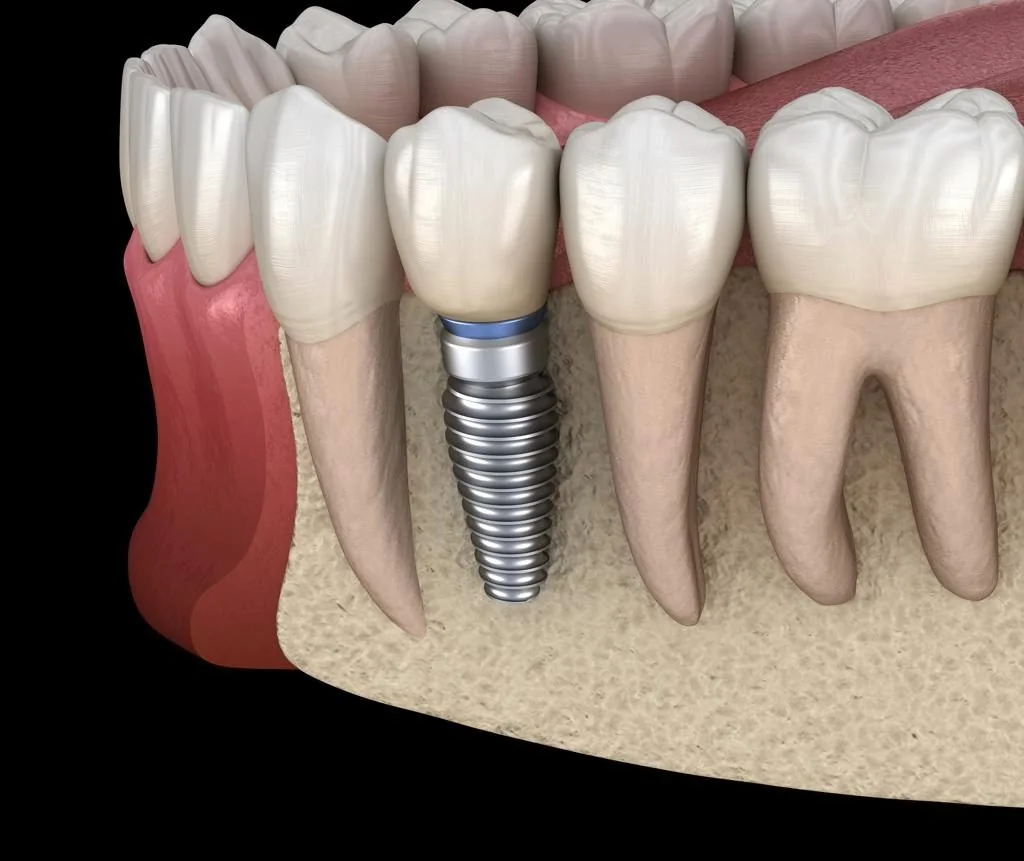
Step 1: a 3D scan of your jaw
Everything starts with a CBCT scan (Cone Beam CT), taken at the practice on a large-field NewTom unit. In one quick examination, it reconstructs your jaw in three dimensions. It measures:
- the height and width of the bone where the future tooth will be;
- bone density;
- the path of the inferior alveolar nerve, which gives feeling to the lip and chin;
- the position of the maxillary sinus, above the upper molars;
- the roots of neighbouring teeth.
A conventional panoramic X-ray does not give this information in depth. The CBCT shows the bone from every angle.
Step 2: a digital impression of your teeth
The digital intraoral scanner replaces impression paste. A small camera records your teeth and gums accurately in 3D. This impression lets the implant be planned from the future tooth, not just from the bone.
Step 3: virtual planning
The two files are merged in planning software. On one screen, Dr Yousefpour sees your bone, nerves, sinus, teeth and the tooth to be replaced. He can then:
- choose the length and diameter of each implant;
- set its angle and depth with great precision;
- keep a safety margin from the nerve, the sinus and neighbouring roots;
- place the implant where the future crown will be strongest and look best.
When a lack of bone is visible at this stage, the planning also shows whether a bone graft or sinus lift is needed, and where. When your dentist will make the crown, the implant position can be discussed with them.
Step 4: the custom surgical guide
From this plan, a surgical guide is made to measure. It is a tray that sits on your teeth or gums during the operation. It has guide channels that direct the drill exactly along the planned axis, angle and depth. The plan made on the computer is thus carried out in your mouth.
For the most demanding cases: X-Guide dynamic navigation
Face Clinic also has X-Guide dynamic navigation. It works rather like GPS: an optical tracking system follows the position of the drill in real time, and a screen shows, moment by moment, where the instrument is in relation to the 3D plan.
Navigation stays highly precise even in the tightest sites, for example at the back of the mouth where a guide is hard to fit. It also allows the procedure to be adjusted during surgery if the bone shows something unexpected. The choice between guide and navigation depends on your case.
What this changes for you
| What you gain | |
|---|---|
| Safety | The nerve, sinus and neighbouring roots are located and avoided from the planning stage |
| Precision | The implant is placed in the position decided in advance, for a well-positioned crown |
| Predictability | The number of implants, the need for a graft and the course of treatment are known before surgery |
| Comfort | The least invasive technique possible is preferred |
| Complex cases | Situations with limited bone can be treated more safely |
What technology does not replace
A guide or navigation screen does not place the implant instead of the surgeon. You need to read the scan, choose the right solution, manage fragile bone or a thin sinus, and deal with the unexpected. Dr Yousefpour is a maxillofacial surgeon: he knows the whole anatomy of the jaws, from the inferior alveolar nerve to the maxillary sinus, and performs bone grafts, sinus lifts and zygomatic implants himself when bone is lacking. With more than 25 years of surgery of the face and jaws, technology is there to serve that experience, not to replace it.
The operation and afterwards
| In practice | |
|---|---|
| Duration | 45 minutes to 2 hours, depending on the number of implants |
| Anaesthesia | Local, sedation possible |
| Hospital stay | Day case |
| Osseointegration | 3 to 4 months, with a temporary tooth possible for appearance |
| Crown | Fitted afterwards, at the practice or by your dentist |
Modern implant dentistry has a very high success rate, estimated at 95% to 98%. Like any surgery, it carries risks, which are explained at the consultation: swelling, infection, rarely failed osseointegration. Prior 3D imaging is there precisely to prevent complications involving the nerve and sinus.
Frequently asked questions
Is guided surgery worthwhile for a single implant?
Yes. Even for one tooth, 3D planning helps choose the right implant size, check the distance from the nerve or sinus, and position the crown ideally between the neighbouring teeth.
Does a CBCT scan involve radiation?
CBCT uses X-rays, like any radiograph, but it is designed for imaging the jaws and teeth. It is taken when the information it provides is needed for the safety of your treatment.
Is it more painful?
No. The operation is done under local anaesthetic, with sedation possible. Swelling and moderate discomfort are common in the following days and are controlled with suitable treatment.
Can my dentist refer me?
Yes. Dr Yousefpour carries out the planning and surgery, then you go back to your dentist for the crown, with the report and imaging.
In summary
- CBCT and digital impressions reconstruct your jaw and teeth in 3D.
- The implant is planned on the computer from the future tooth, away from the nerve and sinus.
- A custom guide or X-Guide dynamic navigation carries out that plan during surgery.
- You gain safety, precision and predictability, including in complex cases.
- Technology serves the experience of a maxillofacial surgeon who also handles bone grafts, sinus lifts and zygomatic implants.
All the information is on the Dental implants page. For what happens next, also read Having a dental implant placed: steps, pain and timeline.
This article is general information. Only a consultation can determine the right treatment for your situation.
Building your plan, together.
Discuss your situation, the options and the stages of treatment with Dr Yousefpour.
BOOK AN APPOINTMENT